Recently I was talking to a couple of our airworthiness engineers over the lunch table. They are heavily involved in older vehicle restoration including types such as MG TFs and Sunbeam Alpines. I ventured to ask them how you could decipher or make sense of the nomenculture used by SU to delineate the size of a carburettor. As we know a 13/4-inch SU is a 6 e.g. HD6 and a 2-inch is an 8. They admitted they had no idea and I was in no better informed either.
Wandering into the room arrived one of our administrative persons who is also well known in historic racing circles for campaigning a supercharged Austin 7 and being a bit of a devil on hill climbing. The question was put to him and he replied immediately “it is all very easy” and he went on to say: -
“The original SU carby is a 1 inch carby. As they made them bigger they simply quoted the number of 1/8 inches over one inch. Hence the HD6 you mentioned is 1 inch plus 6/8 inch [3/4] inch giving an overall diameter of 1 3/4 inches. A HD8 is 1 inch plus 8/8 inches giving an overall diameter of 2 inches. In addition the H stands for horizontal throat and the D means the main jet is mounted on a flexible diaphragm. By the way always measure the diameter of an SU carby at the outlet end where it joins onto the inlet manifold.”
With that he finished filling his coffee cup and wandered off out of the room leaving three highly technical trained engineering people reeling in his knowledgeable wake
While in Adelaide I had a plaintive phone call from youngest son that his Series3 XJ6 had simply stopped on the road and he had to have it towed home. We stated a long-range diagnosis by phone. Put the car into drive and turn to start. Does the fuel pump run? "Yes" says he. Pull the coil lead from the distributor and check for spark. Is there any? "Yes" says he. Disconnect a fuel injector hose from the fuel rail and run the fuel pump in start with the car in drive to see if any fuel comes out. "No fuel" says he. Check the fuel filter can you blow through it? "No" says he. Replace fuel filter with a new one and try again. "Didn't work," says he. All this took a number of phone calls over several days. Finally I said, "I will be home in a few days so hang off until then".
The upshot was that although the fuel pump ran there was no pressure. The pump was opened up and it was found that the pump section had seized but a shear pin system allowed the motor to still run. Another pump was obtained and the car started immediately. So don't be fooled by a fuel injection pump, which sounds to be running OK. Disconnect the fuel line at the outlet and check that there is flow and pressure.
While in Adelaide I had a plaintive phone call from youngest son that his Series3 XJ6 had simply stopped on the road and he had to have it towed home. We stated a long-range diagnosis by phone. Put the car into drive and turn to start. Does the fuel pump run? "Yes" says he. Pull the coil lead from the distributor and check for spark. Is there any? "Yes" says he. Disconnect a fuel injector hose from the fuel rail and run the fuel pump in start with the car in drive to see if any fuel comes out. "No fuel" says he. Check the fuel filter can you blow through it? "No" says he. Replace fuel filter with a new one and try again. "Didn't work," says he. All this took a number of phone calls over several days. Finally I said, "I will be home in a few days so hang off until then".
The upshot was that although the fuel pump ran there was no pressure. The pump was opened up and it was found that the pump section had seized but a shear pin system allowed the motor to still run. Another pump was obtained and the car started immediately. So don't be fooled by a fuel injection pump, which sounds to be running OK. Disconnect the fuel line at the outlet and check that there is flow and pressure.
Old carburetors and their associated linkages get very grotty with age, general dirt accumulation and fuel leaks/weeps. They can end up covered in black gunk and looking like they have been barbecued. Degreasers and most similar products won’t shift the black gunk which is a residue composed of fuel dye and evaporated hydrocarbons.
The answer is quite simple. Use lacquer thinners or acetone to remove this grunge. Use an old retired [shaggy dog] tooth brush or a similar stiff brush and scrub the carby whilst keeping the brush wet with the thinners or acetone. If the carbys are still mounted on the engine spread a good thick layer of news paper under the work area to catch the drips etc. as you don’t want to splatter the painted areas inside the engine bay with these solvents.[they will eat the paint]
You will be genuinely surprised at how easy it is to clean your carbys using this method. Note that in the end the toothbrush will eventually fail, as the solvents will destroy the plastic handle so don’t use the one with which you are currently brushing your teeth.
Please take the usual precautions when using highly flammable solvents. Use a well ventilated area with no smoking or fire sources in the vicinity and personal protection for your eyes, lungs, skin etc.
Readers might remember an issue a couple of years ago when my subject topic was a replacement fuel pump for the SU pump fitted to the early model (pre fuel injected) cars. I proposed at the time to trial the "electronic" pump in one of my cars. I installed it in my MK 1 3.4 auto as the SU pump in that car had been a real source of trouble in spite of a complete overhaul.
The electronic pump has been very reliable and has not caused any problems whatsoever. My only remark is because it is not mounted on any noise insulation it is noisy prior to engine start. Once the engine is running you do not hear the pump. Don't forget that the SU pump is normally mounted on noise insulating rubbers. I believe if I devised a noise insulating mounting there would not be much difference between the two types.
In the meantime I have discovered that there is an electric low pressure [3 pounds per square inch {psi}] rotary fuel pump on the market that is designed for carburettor cars. Electric rotary fuel pumps are normally used by fuel injected cars such as the Series 3 XJ6 and your current model Ford Falcon and Holden Commodore. However these pumps are very high pressure [typically around 30 psi] and unsuitable for carburettor vehicles as the float valve to control fuel level in the carby cannot handle the pressure. The pump is "Carter" brand made in the USA however AKSES who advertise in this magazine advise that they are having difficulty getting stock at the moment.
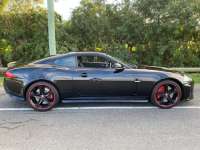 I am the second owner of the car which has done very low mileage. Build Date MM/YY 04/2011 Compliance Date 01/2012 Odometer Reading 33023KM Factory Options Brief description of any damage – dents, scratches, kerbed wheels, etc. No Damage. Car has had a Ceramic Coating Applied. Service History information Full-Service History by Jaguar Dealer. This car has always been garaged and not driven in wet conditions. The car has a chip installed for performance and fuel economy. Highway cycle 9 litres per 100 km. The power is over 600 h/p or 420 kws. It is available with custom number plates…
 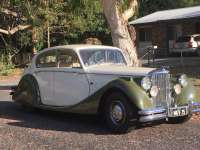 1949 MK V 3.5L Good running car. Excellent interior Price: $28,000 Tonny 0418 191 700
 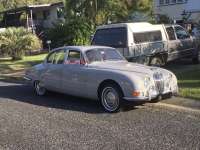 1964 S Type. 3.4 Auto. Good all round, rust free. Price: $16,000 Tonny 0418 191 700
  This is one of only 10 XFR/XFRS models imported to Australian by JLR in 2014/15. This rare vehicle has a 5.0 Supercharged V8 engine and has an impressive list of factory options over and above all the standard luxuries : XFR Dynamic pack Italian Racing Red Metallic Paint Dark mesh aluminium and carbon fibre trim 20” Varuna wheels Black pack Jet Hood lining 60/40 Split fold rear seat This one owner vehicle has done less than 75,000 klm, been garaged since new and maintained by a Jaguar specialist. It is beautiful to drive, understated in a lot of ways, comfortable,…
 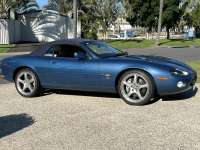 Astandout colour combination of Adriatic Blue Mica paint, with the Dove leather interior and a DarkBlue convertible top. Jaguar optioned 20-inch Paris wheels complete the look. Australian delivered with the Supercharged 4.2 litre , the six speed ZF gearbox and sport mode. This is a usable classic performance vehicle.Plenty of boot space for a getaway, and yes your Golf Clubs will fit in this convertible. Parrot Bluetooth fitted. Voice activated answering. Syncs with your contacts etc. The wind deflector is an effective addition. I’ve owned this car since 2018, and I’ve covered roughly 11000km during those 7.5 years. The car…
 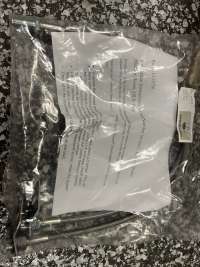 Ezi Bleed kit for the rear brakes on IRS cars. Makes bleeding of the inboard rear brakes by effectively moving the bleed nipples to much more accessible locations. Unused still in the packet. Price: $120 Heat shields Left and Right for the firewall of a V12 E Type. Brand new.. Price: $120 for both Located in Redcliffe. Prices are negotiable .
 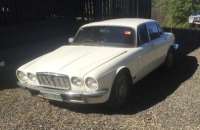 1, White XJ Partially Restored, New fuel tanks with senders have been installed. Fuel pumps, filters and lines have all been cleaned and inworking order Radiator has been refurbished and installed with all new hoses and belts New coil has been fitted but will need some electrical work done. Motor has been freed up and turns. It was reconditioned at some point in the past, and should run ok. Front brake calipers and brake master cylinder, I have been informed have all been refurbished, but will need to be flushed out and inspected. I have sourced a full set of…
| Tue Apr 14, 2026 @12:00AM Rick's Run |
| Wed Apr 15, 2026 @12:00AM Magazine Deadline |
| Fri Apr 17, 2026 @12:00AM Rocky Nats |
| Sat Apr 18, 2026 @12:00AM Rocky Nats |
| Sun Apr 19, 2026 @12:00AM BNE Cruise Brisbane (Hamilton) to Redcliffe. |
| Sun Apr 19, 2026 @12:00AM Capricornia Meeting |
| Sun Apr 19, 2026 @12:00AM Rocky Nats |
| Tue Apr 21, 2026 @ 7:30PM - BNE South Side Meeting 1 |
| Sat Apr 25, 2026 @12:00AM ANZAC Day |
| Sun Apr 26, 2026 @10:00AM - 02:00PM Bunyip Picnic |