Recently I was talking to a couple of our airworthiness engineers over the lunch table. They are heavily involved in older vehicle restoration including types such as MG TFs and Sunbeam Alpines. I ventured to ask them how you could decipher or make sense of the nomenculture used by SU to delineate the size of a carburettor. As we know a 13/4-inch SU is a 6 e.g. HD6 and a 2-inch is an 8. They admitted they had no idea and I was in no better informed either.
Wandering into the room arrived one of our administrative persons who is also well known in historic racing circles for campaigning a supercharged Austin 7 and being a bit of a devil on hill climbing. The question was put to him and he replied immediately “it is all very easy” and he went on to say: -
“The original SU carby is a 1 inch carby. As they made them bigger they simply quoted the number of 1/8 inches over one inch. Hence the HD6 you mentioned is 1 inch plus 6/8 inch [3/4] inch giving an overall diameter of 1 3/4 inches. A HD8 is 1 inch plus 8/8 inches giving an overall diameter of 2 inches. In addition the H stands for horizontal throat and the D means the main jet is mounted on a flexible diaphragm. By the way always measure the diameter of an SU carby at the outlet end where it joins onto the inlet manifold.”
With that he finished filling his coffee cup and wandered off out of the room leaving three highly technical trained engineering people reeling in his knowledgeable wake
While in Adelaide I had a plaintive phone call from youngest son that his Series3 XJ6 had simply stopped on the road and he had to have it towed home. We stated a long-range diagnosis by phone. Put the car into drive and turn to start. Does the fuel pump run? "Yes" says he. Pull the coil lead from the distributor and check for spark. Is there any? "Yes" says he. Disconnect a fuel injector hose from the fuel rail and run the fuel pump in start with the car in drive to see if any fuel comes out. "No fuel" says he. Check the fuel filter can you blow through it? "No" says he. Replace fuel filter with a new one and try again. "Didn't work," says he. All this took a number of phone calls over several days. Finally I said, "I will be home in a few days so hang off until then".
The upshot was that although the fuel pump ran there was no pressure. The pump was opened up and it was found that the pump section had seized but a shear pin system allowed the motor to still run. Another pump was obtained and the car started immediately. So don't be fooled by a fuel injection pump, which sounds to be running OK. Disconnect the fuel line at the outlet and check that there is flow and pressure.
While in Adelaide I had a plaintive phone call from youngest son that his Series3 XJ6 had simply stopped on the road and he had to have it towed home. We stated a long-range diagnosis by phone. Put the car into drive and turn to start. Does the fuel pump run? "Yes" says he. Pull the coil lead from the distributor and check for spark. Is there any? "Yes" says he. Disconnect a fuel injector hose from the fuel rail and run the fuel pump in start with the car in drive to see if any fuel comes out. "No fuel" says he. Check the fuel filter can you blow through it? "No" says he. Replace fuel filter with a new one and try again. "Didn't work," says he. All this took a number of phone calls over several days. Finally I said, "I will be home in a few days so hang off until then".
The upshot was that although the fuel pump ran there was no pressure. The pump was opened up and it was found that the pump section had seized but a shear pin system allowed the motor to still run. Another pump was obtained and the car started immediately. So don't be fooled by a fuel injection pump, which sounds to be running OK. Disconnect the fuel line at the outlet and check that there is flow and pressure.
Old carburetors and their associated linkages get very grotty with age, general dirt accumulation and fuel leaks/weeps. They can end up covered in black gunk and looking like they have been barbecued. Degreasers and most similar products won’t shift the black gunk which is a residue composed of fuel dye and evaporated hydrocarbons.
The answer is quite simple. Use lacquer thinners or acetone to remove this grunge. Use an old retired [shaggy dog] tooth brush or a similar stiff brush and scrub the carby whilst keeping the brush wet with the thinners or acetone. If the carbys are still mounted on the engine spread a good thick layer of news paper under the work area to catch the drips etc. as you don’t want to splatter the painted areas inside the engine bay with these solvents.[they will eat the paint]
You will be genuinely surprised at how easy it is to clean your carbys using this method. Note that in the end the toothbrush will eventually fail, as the solvents will destroy the plastic handle so don’t use the one with which you are currently brushing your teeth.
Please take the usual precautions when using highly flammable solvents. Use a well ventilated area with no smoking or fire sources in the vicinity and personal protection for your eyes, lungs, skin etc.
Readers might remember an issue a couple of years ago when my subject topic was a replacement fuel pump for the SU pump fitted to the early model (pre fuel injected) cars. I proposed at the time to trial the "electronic" pump in one of my cars. I installed it in my MK 1 3.4 auto as the SU pump in that car had been a real source of trouble in spite of a complete overhaul.
The electronic pump has been very reliable and has not caused any problems whatsoever. My only remark is because it is not mounted on any noise insulation it is noisy prior to engine start. Once the engine is running you do not hear the pump. Don't forget that the SU pump is normally mounted on noise insulating rubbers. I believe if I devised a noise insulating mounting there would not be much difference between the two types.
In the meantime I have discovered that there is an electric low pressure [3 pounds per square inch {psi}] rotary fuel pump on the market that is designed for carburettor cars. Electric rotary fuel pumps are normally used by fuel injected cars such as the Series 3 XJ6 and your current model Ford Falcon and Holden Commodore. However these pumps are very high pressure [typically around 30 psi] and unsuitable for carburettor vehicles as the float valve to control fuel level in the carby cannot handle the pressure. The pump is "Carter" brand made in the USA however AKSES who advertise in this magazine advise that they are having difficulty getting stock at the moment.
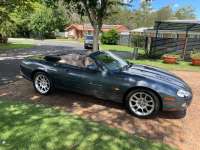 98000 km on the clock only. Engineered with a 4.0 litre engine and 276.0kW of power, reaching speeds of 100km/h in 5.6 seconds!. This was my wife's car in Hong Kong from 2013 to to 2020, which she used to drive 15 minutes each way to work. In early 2021 we imported the car into Australia so that we would have a car here when we visited family on holidays. We retired in 2023 and have used the car sparingly since. We have now sold our home and downsized to an apartment where we have a single carpark available. So…
 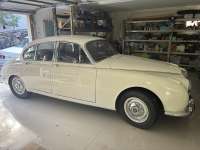 1968 Jaguar Daimler 250 Turner V8 (restored) The Daimler 250 represents a pivotal moment in British luxury motoring, bridging the gap between Jaguar's sporting heritage and Daimler's refined tradition. Launched in 1962 and produced through the mid-1960s, the 250 was the company's answer to the demand for a more accessible luxury saloon, powered by a 250 cubic inch V8 cylinder engine paired with an automatic transmission. This 1968 example received a comprehensive mechanical inspection and attention in 2022-2023, encompassing engine, suspension, mountings, seals, the fuel tank was removed and re-lined, new fuel pump installed, and this car is a genuine…
 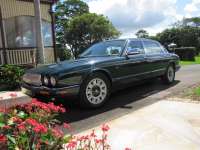 DAIMLER DOUBLE SIX 1996 X305 This car may well be the finest example of the last of the V12 engined Daimlers. It has travelled just 81,000km. The date of manufacture is 12 December 1996 as per Daimler Heritage Certificate. The last of series X305 incorporated much improved braking, air conditioning and ignition systems using Nippon Denzo coil packs. The car has a complete history file, all books and tools including the under bonnet tools still boxed. The car is unmarked inside and out, has over rugs and has recently been fitted with new Pirelli tyres. The personal number plate…
  The September-October 2026 Edition of Queensland Jaguar Driver Magazine is now online and available to members by logging on
 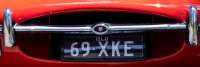 EOI E type number plates & roll cage. CAMS-registered E-Type full six-point roll cage – with side intrusion bars. registration no. 31411 – original documentation included. A Norm Singleton manufactured professionally custom fabricated for the E-Type and was fitted to a 1969 FHC from which it has been removed. 69XKE QLD black and white premium personalised number plates also removed from vehicle and available for sale. Also available original torsion bars and sway bar removed from same car. Brisbane area for collection. Ph Dov 0407 879 501 to discuss.
 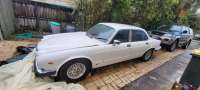 The car has been standing for about 5 of it’s 10 years since we bought it. The previous owner converted to Dual fuel pumps but didn’t install pre filters in front of them with the result that debris flowed from the tank to the original pumps which failed, the passenger side tank has been cleaned out and a new pump fitted. this resulted in a fuel hose failure at the injection header and we decided that further work would probably be unwarranted as we are not likely to use the car in the future. The car is located in Hervey…
| Sun Oct 18, 2026 Capricornia AGM |
| Sun Oct 18, 2026 Lunch at Albert River Winery |
| Sun Oct 18, 2026 WBB Hervey Bay Botanical Gardens |
| Mon Oct 19, 2026 @10:00AM - Brisbane Register 2026 AGM |
| Fri Oct 23, 2026 @11:00AM - FNQ Register Oct Prowl |
| Sat Oct 24, 2026 @11:30AM - Modern Compact Lunch |
| Mon Oct 26, 2026 @ 7:00PM - Gold Coast Monthly Meeting |
| Sun Nov 01, 2026 @ 8:00AM - 03:00PM Jimboomba Festival Classic Car Display |
| Wed Nov 04, 2026 Lunch Run TBA |
| Tue Nov 10, 2026 Muller Park Bli Bli to Rolls Royce Museum |