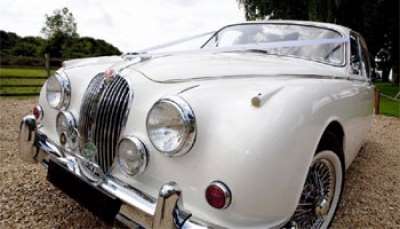
Ben Stafford had another problem with his 420. There was generally very poor oil pressure of only 20 to 25 PSI when hot and cruising on the open road that dropped back to almost 0 at idle. The engine did not sound "clapped out" and the oil consumption was quite reasonable. The electric oil pressure gauge was suspected but substitution of a hard line gauge only confirmed that the electric gauge was telling a true story.
I suggested that before he did any thing drastic like an engine overhaul he should check the condition of the oil pressure relief valve. I have had two occasions in Jaguars where low oil pressure was traced to relief valve problems.
Ben found that the oil pressure relief valve spring had been bent. This resulted in the valve itself sitting at an angle on the relief hole and a groove had been worn into the face of the valve. He used a lathe to clean up the face of the valve and subsisted a straight spring for the bent one
The results were fairly dramatic with an improvement to 45 PSI on the open road and 15-20 PSI at idle when hot. In his own summation of the situation he "was surprised that such a small gap in the relief valve had led to such a dramatic loss of oil pressure."
Whither goes thy oil pressure? (continued)
MY Mk2 3.8 Auto has had a slightly low oil pressure and I was a little concerned that the engine may have been "loose" i.e. getting worn. I took a trip to Ben Stafford's to use his hoist and get easy access to the pressure relief valve.
Upon removing the relief valve it became immediately obvious that the valve face was not seating properly. A quick trip in the lathe to face off the valve resulted in an increase of 10 pounds per square inch over all of the operating range.
However I now believe the real problem lies in wear on the upper flutes of the valve which allows it to sit in the bore of the valve body at an angle and the final solution will be to replace the valve itself with a new part and possibly even re-sleeve the valve body.
I have been intrigued by an on going problem in the 1960s model Jaguars such as MK 2, S type, E type, 420 etc. The main area of concern is the oil pressure gauge. This is an electric device that was apparently Smiths first foray into the domain of electrical transmitted oil pressure. Apparently the Jag Enthusiasts Club in England has also been following up on this problem.
To say that the Smiths electric oil pressure gauge is an accurate instrument would be taking the truth very lightly. It is one of the most Heath Robinson devices I have ever encountered in any instrumentation. Normally an instrument transmitter contains a device a bit like the variable resistor used in volume controls in a radio. These are generically referred to as "potentiometers". As the temperature or pressure changes the variable resistor feeds more or less voltage to the gauge in your dash panel to make the indication. Simple enough?
However Mr. Smith put a whole new twist on the scene by using a system in his oil pressure transmitter that works as follows. The flexible diaphragm in the transmitter has an electrical contact on the diaphragm. When oil pressure expands the diaphragm this contact connects to another contact on the end of a bi-metallic strip. This makes a circuit through a heating wire wound around the strip which heats up until the bi-metallic strip bends and breaks contact with points on the diaphragm.
The bi-metallic strip then starts to cool down and straightens out until contact is made again and the process repeats. The more oil pressure there is the longer it takes for the strip to heat up and therefore the more electric current runs through the system. This current is measured and shown on your oil pressure gauge as pounds per square inch!
The bi-metallic strip system is well known and is used in the majority of "flasher" units in directional indicators in motorcars. However they do not last forever and eventually they fail due typically the points burning out. It is an electro/mechanical device and as such will never be a stable source of information for a gauge system.
Why I am making this point is that an old oil pressure transmitter can give quite erroneous readings. One club member was really quite concerned with his oil pressure in an XK series motor in a MK2, which only ever got to about 40 PSI cold and was flat out making 20 PSI when hot. The engine was generally in good order and was not rattling or giving any typical signs of distress associated with clapped out Jag engines. On my suggestion he obtained a direct reading after market gauge and coupled it up in place of the electric system and was delighted to find that all of the above pressures were just about doubled.
I have also run across this problem and have had widely divergent readings from different transmitters. In fact I trust the older Bowden Tube direct reading oil pressure gauge used in early Jags like the MK5, 7, 8 and MK 1 any day against one of these later electrical devices.
The good news is that a company by the name of CAREBONT in England have purchased the rights and tooling for early Smiths gauges and have redesigned the oil pressure gauge for these 1960s Jags. This kit apparently consists of a completely new transmitter and gauge using modern techniques but looks just like the original. It is not cheap at around 70 pounds or about A$200 [Australian] dollars but the current price for a new oil gauge transmitter to fit the old system is A$130 so it would be worthwhile going the extra dollars for something new, reliable and accurate.
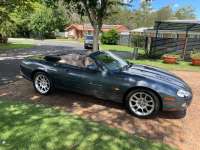 98000 km on the clock only. Engineered with a 4.0 litre engine and 276.0kW of power, reaching speeds of 100km/h in 5.6 seconds!. This was my wife's car in Hong Kong from 2013 to to 2020, which she used to drive 15 minutes each way to work. In early 2021 we imported the car into Australia so that we would have a car here when we visited family on holidays. We retired in 2023 and have used the car sparingly since. We have now sold our home and downsized to an apartment where we have a single carpark available. So…
 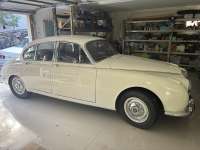 1968 Jaguar Daimler 250 Turner V8 (restored) The Daimler 250 represents a pivotal moment in British luxury motoring, bridging the gap between Jaguar's sporting heritage and Daimler's refined tradition. Launched in 1962 and produced through the mid-1960s, the 250 was the company's answer to the demand for a more accessible luxury saloon, powered by a 250 cubic inch V8 cylinder engine paired with an automatic transmission. This 1968 example received a comprehensive mechanical inspection and attention in 2022-2023, encompassing engine, suspension, mountings, seals, the fuel tank was removed and re-lined, new fuel pump installed, and this car is a genuine…
 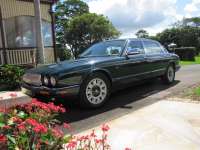 DAIMLER DOUBLE SIX 1996 X305 This car may well be the finest example of the last of the V12 engined Daimlers. It has travelled just 81,000km. The date of manufacture is 12 December 1996 as per Daimler Heritage Certificate. The last of series X305 incorporated much improved braking, air conditioning and ignition systems using Nippon Denzo coil packs. The car has a complete history file, all books and tools including the under bonnet tools still boxed. The car is unmarked inside and out, has over rugs and has recently been fitted with new Pirelli tyres. The personal number plate…
 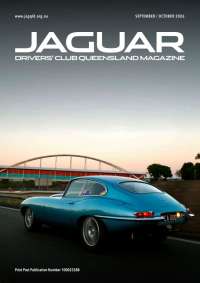 The September-October 2026 Edition of Queensland Jaguar Driver Magazine is now online and available to members by logging on
 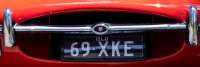 EOI E type number plates & roll cage. CAMS-registered E-Type full six-point roll cage – with side intrusion bars. registration no. 31411 – original documentation included. A Norm Singleton manufactured professionally custom fabricated for the E-Type and was fitted to a 1969 FHC from which it has been removed. 69XKE QLD black and white premium personalised number plates also removed from vehicle and available for sale. Also available original torsion bars and sway bar removed from same car. Brisbane area for collection. Ph Dov 0407 879 501 to discuss.
 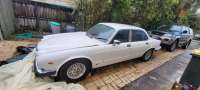 The car has been standing for about 5 of it’s 10 years since we bought it. The previous owner converted to Dual fuel pumps but didn’t install pre filters in front of them with the result that debris flowed from the tank to the original pumps which failed, the passenger side tank has been cleaned out and a new pump fitted. this resulted in a fuel hose failure at the injection header and we decided that further work would probably be unwarranted as we are not likely to use the car in the future. The car is located in Hervey…
| Sun Oct 18, 2026 Capricornia AGM |
| Sun Oct 18, 2026 Lunch at Albert River Winery |
| Sun Oct 18, 2026 WBB Hervey Bay Botanical Gardens |
| Mon Oct 19, 2026 @10:00AM - Brisbane Register 2026 AGM |
| Fri Oct 23, 2026 @11:00AM - FNQ Register Oct Prowl |
| Sat Oct 24, 2026 @11:30AM - Modern Compact Lunch |
| Mon Oct 26, 2026 @ 7:00PM - Gold Coast Monthly Meeting |
| Sun Nov 01, 2026 @ 8:00AM - 03:00PM Jimboomba Festival Classic Car Display |
| Wed Nov 04, 2026 Lunch Run TBA |
| Tue Nov 10, 2026 Muller Park Bli Bli to Rolls Royce Museum |