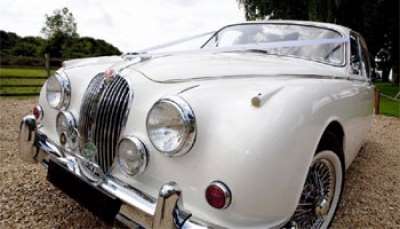
While working on the MK5 I made an accidental re-discovery of a simple, cheap and effective way to get aluminium polished without resorting to power tools. I have previously mentioned the use of wet and dry sandpaper of various grades starting with quite coarse grades and then finer grades to cut the surface prior to polishing on a buffing wheel.
That is all very good if you can remove the part from the engine however in the case of the MK5 Jag there is an alloy water manifold which would require a major effort to get off the engine and I only wanted to clean it up.
Serendipity intervened and part of the water manifold was wet with penetrating oil when I rubbed it with some wet and dry. The results were quite spectacular and it subsequently took only 10 minutes to convert a grotty looking piece of alloy into something of which you could be reasonably proud . It took me back to my motorcycling days and some of the tricks I used on my “Beeza” [BSA 650 cc sprung heel Golden Flash] to keep the alloy engine and chain cover polished.
If you need to resurrect a bit of alloy such as a cam cover I suggest spraying it with penetrating oil and getting stuck into it with initially 400 grade if it is very rough and corroded.You then and work up through 600 grade and finally 1000 or 1200 grade paper cutting ” wet” all the way i.e. replenish the penetrating oil regularly. The final finish with 1000 or 1200 is reasonably good and from that point on a good shine can be achieved with cutting compound or metal polish. Note-You will get heaps of black “gunk” coming off by this method. That is OK as you are removing oxidised alloy as well as base material. Hint- where possible use a rubber sanding block to support the wet and dry paper and to avoid a “wavy” uneven surface. In short treat alloy like paint.
In previous articles I have always quoted using “dry” cutting techniques. I should have previously mentioned /evaluated wet or lubricated cutting techniques because they are usually more efficient. By the way you don’t have to use penetrating oil. Just about any petrochemical fluid will suffice for aluminium alloy including petrol, diesel, kerosene and mineral turps. For safety it would be best to use diesel or kerosene to reduce the risk of fires etc. Penetrating oil is preferred because it has a very low rate of evaporation and the oil assists in lubricating the cutting area.
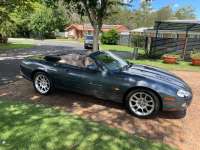 98000 km on the clock only. Engineered with a 4.0 litre engine and 276.0kW of power, reaching speeds of 100km/h in 5.6 seconds!. This was my wife's car in Hong Kong from 2013 to to 2020, which she used to drive 15 minutes each way to work. In early 2021 we imported the car into Australia so that we would have a car here when we visited family on holidays. We retired in 2023 and have used the car sparingly since. We have now sold our home and downsized to an apartment where we have a single carpark available. So…
 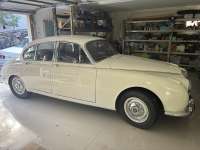 1968 Jaguar Daimler 250 Turner V8 (restored) The Daimler 250 represents a pivotal moment in British luxury motoring, bridging the gap between Jaguar's sporting heritage and Daimler's refined tradition. Launched in 1962 and produced through the mid-1960s, the 250 was the company's answer to the demand for a more accessible luxury saloon, powered by a 250 cubic inch V8 cylinder engine paired with an automatic transmission. This 1968 example received a comprehensive mechanical inspection and attention in 2022-2023, encompassing engine, suspension, mountings, seals, the fuel tank was removed and re-lined, new fuel pump installed, and this car is a genuine…
 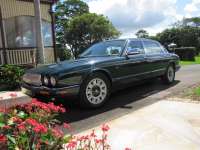 DAIMLER DOUBLE SIX 1996 X305 This car may well be the finest example of the last of the V12 engined Daimlers. It has travelled just 81,000km. The date of manufacture is 12 December 1996 as per Daimler Heritage Certificate. The last of series X305 incorporated much improved braking, air conditioning and ignition systems using Nippon Denzo coil packs. The car has a complete history file, all books and tools including the under bonnet tools still boxed. The car is unmarked inside and out, has over rugs and has recently been fitted with new Pirelli tyres. The personal number plate…
 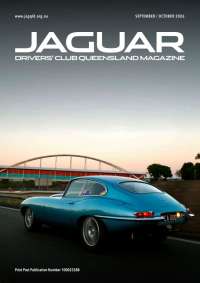 The September-October 2026 Edition of Queensland Jaguar Driver Magazine is now online and available to members by logging on
 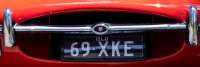 EOI E type number plates & roll cage. CAMS-registered E-Type full six-point roll cage – with side intrusion bars. registration no. 31411 – original documentation included. A Norm Singleton manufactured professionally custom fabricated for the E-Type and was fitted to a 1969 FHC from which it has been removed. 69XKE QLD black and white premium personalised number plates also removed from vehicle and available for sale. Also available original torsion bars and sway bar removed from same car. Brisbane area for collection. Ph Dov 0407 879 501 to discuss.
 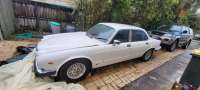 The car has been standing for about 5 of it’s 10 years since we bought it. The previous owner converted to Dual fuel pumps but didn’t install pre filters in front of them with the result that debris flowed from the tank to the original pumps which failed, the passenger side tank has been cleaned out and a new pump fitted. this resulted in a fuel hose failure at the injection header and we decided that further work would probably be unwarranted as we are not likely to use the car in the future. The car is located in Hervey…
| Sun Oct 18, 2026 Capricornia AGM |
| Sun Oct 18, 2026 Lunch at Albert River Winery |
| Sun Oct 18, 2026 WBB Hervey Bay Botanical Gardens |
| Mon Oct 19, 2026 @10:00AM - Brisbane Register 2026 AGM |
| Fri Oct 23, 2026 @11:00AM - FNQ Register Oct Prowl |
| Sat Oct 24, 2026 @11:30AM - Modern Compact Lunch |
| Mon Oct 26, 2026 @ 7:00PM - Gold Coast Monthly Meeting |
| Sun Nov 01, 2026 @ 8:00AM - 03:00PM Jimboomba Festival Classic Car Display |
| Wed Nov 04, 2026 Lunch Run TBA |
| Tue Nov 10, 2026 Muller Park Bli Bli to Rolls Royce Museum |