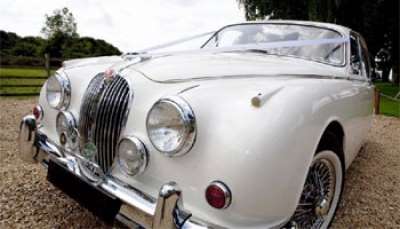


The story of the replacement for the E-type Jaguar, the British performance car. The book contains all the variations of the XJ-S, including the full convertible of 1988 and the XJR-S limited edition, released to celebrate success at Le Mans.


The XJ40 was the mainstay of Jaguar production from 1986 to 1994; it also was the last saloon in which William Lyons had any styling involvement. Its technological sophistication broke new ground, and was the saloon that reintroduced the marque to a younger buying public, despite electronic and body glitches. The XJ40 touted sales of more than 200,000 cars and was a Jaguar showcase. Included here is the history of this recent favorite, with engine specifications, tips on buying, maintaining and restoring your vehicle, and lists of available accessories.


This book travels chronologically through Jaguar's technical history, each chapter starting at a crucial point in the company's evolution. From Harry Weslake's development of Jaguar's original Standard-derived OHV engine, used in the SS Jaguar 100, to the technology incorporated in the latest X-type and S-type models, the reader is taken on a fascinating journey through the Jaguar archives. Reveals many fascinating and previously unknown, behind-the-scenes details of the company's engineering story.

Beautifully styled, like the big cats themselves, the fully updated third edition of this well-received book provides a brief historical overview followed by authoritative descriptions of the cars, saloons, sports cars and GTs from the Mk V and XK120 of 1948 to today's XKR and XF. The importance of the new cars introduced in the 1990s in making Jaguar a volume producer for the first time is analyzed, and with technical specifications, driving impressions and buying hints, this adds up to a veritable feast of information. A must-have purchase for all Jaguar enthusiasts.

The book uses articles published over the years on the subject by internationally recognised collectors and experts Ian Cooling and Tony Bailey, together with sections on the Swallow mascot from another authority, Gilbert Mond, Historian of the Swallow Register. This book will be the definitive guide to this famous mascot and will be essential reading for anyone wishing to learn more about them, or needing to identify examples they are contemplating buying. It draws on key articles by leading authorities Ian Cooling, Tony Bailey and Gil Mond published since 1992 in Jaguar World and Jaguar Automobilia Collector, including the much sought-after major series of Mascot articles that appeared in 2002 and which, like many of these magazines, is no longer available. It also includes especially written additional new material updating the legal position for mounting mascots on cars in the UK, plus articles on finding and building a collection. It also describes the origins of the original F Gordon Crosby designed mascot in 1938 together with many photos of this iconic bronze casting.
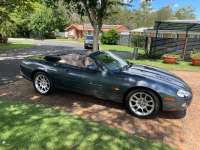 98000 km on the clock only. Engineered with a 4.0 litre engine and 276.0kW of power, reaching speeds of 100km/h in 5.6 seconds!. This was my wife's car in Hong Kong from 2013 to to 2020, which she used to drive 15 minutes each way to work. In early 2021 we imported the car into Australia so that we would have a car here when we visited family on holidays. We retired in 2023 and have used the car sparingly since. We have now sold our home and downsized to an apartment where we have a single carpark available. So…
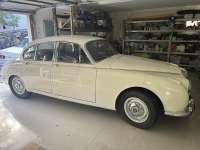 1968 Jaguar Daimler 250 Turner V8 (restored) The Daimler 250 represents a pivotal moment in British luxury motoring, bridging the gap between Jaguar's sporting heritage and Daimler's refined tradition. Launched in 1962 and produced through the mid-1960s, the 250 was the company's answer to the demand for a more accessible luxury saloon, powered by a 250 cubic inch V8 cylinder engine paired with an automatic transmission. This 1968 example received a comprehensive mechanical inspection and attention in 2022-2023, encompassing engine, suspension, mountings, seals, the fuel tank was removed and re-lined, new fuel pump installed, and this car is a genuine…
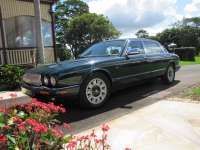 DAIMLER DOUBLE SIX 1996 X305 This car may well be the finest example of the last of the V12 engined Daimlers. It has travelled just 81,000km. The date of manufacture is 12 December 1996 as per Daimler Heritage Certificate. The last of series X305 incorporated much improved braking, air conditioning and ignition systems using Nippon Denzo coil packs. The car has a complete history file, all books and tools including the under bonnet tools still boxed. The car is unmarked inside and out, has over rugs and has recently been fitted with new Pirelli tyres. The personal number plate…
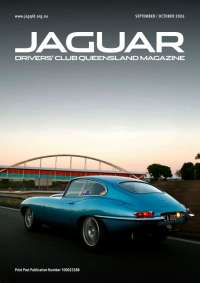 The September-October 2026 Edition of Queensland Jaguar Driver Magazine is now online and available to members by logging on

| Fri Oct 23, 2026 @11:00AM - FNQ Register Oct Prowl |
| Sat Oct 24, 2026 @11:30AM - Modern Compact Lunch |
| Mon Oct 26, 2026 @ 7:00PM - Gold Coast Monthly Meeting |
| Sun Nov 01, 2026 @ 8:00AM - 03:00PM Jimboomba Festival Classic Car Display |
| Wed Nov 04, 2026 Lunch Run TBA |
| Tue Nov 10, 2026 Muller Park Bli Bli to Rolls Royce Museum |
| Sun Nov 15, 2026 WBB AGM Woodgate |
| Mon Nov 16, 2026 @ 6:30PM - JDCQ 2026 AGM |
| Sat Nov 21, 2026 @11:30AM - BNE Register 2026 Christmas Party |
| Tue Nov 24, 2026 @ 6:30PM - HVT27 Zoom Meeting |